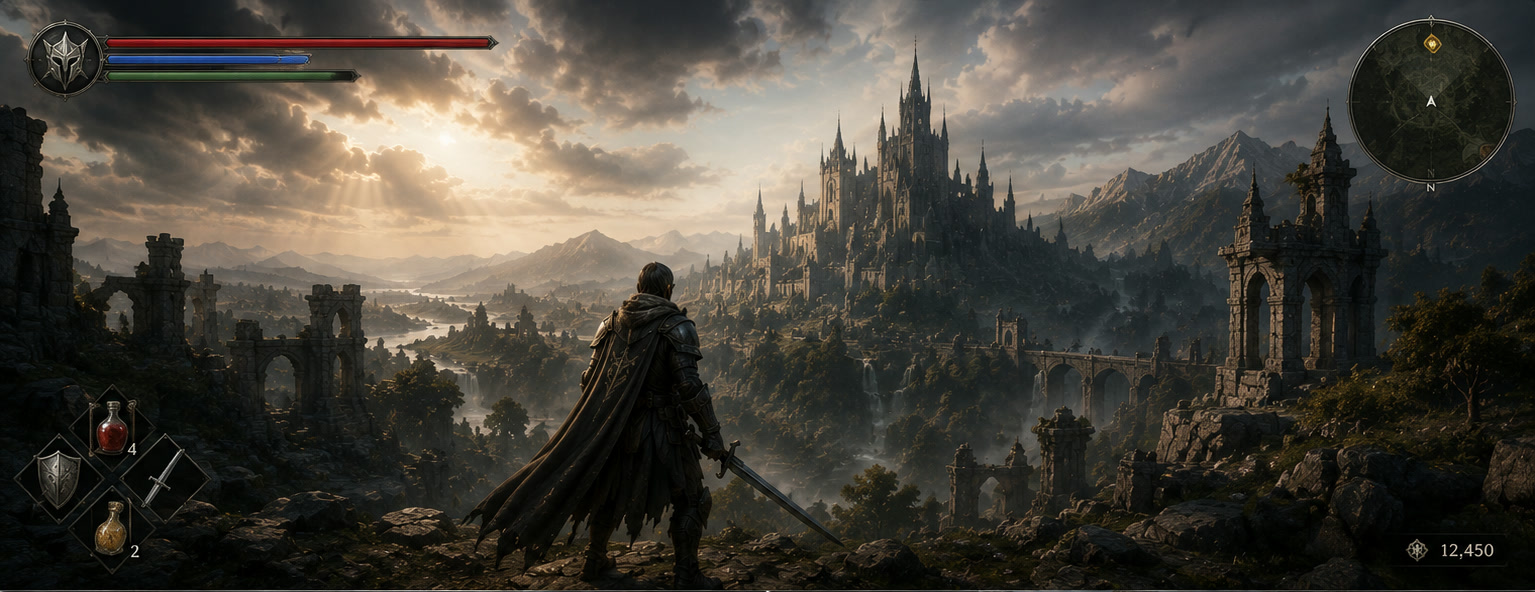
World Exploration View
Wide environment visual showing the tone, scale, and exploration framing of the project.
Dark Fantasy Action RPG
Ashes of Elysium is a dark-fantasy action RPG focused on responsive melee combat, exploration, character progression, and challenging enemy encounters. The project is structured around modular gameplay systems so combat, enemies, abilities, equipment, and progression can expand without tightly coupling individual systems.
Role
Gameplay / Systems Development
Year
Prototype
Platform
PC
Focus
Modular melee combat, AI, and progression architecture
Skill Loadout
Main tools and systems connected to this case study.
Third-person melee combat
Enemy AI state flow
Boss encounter design
Skill-tree progression
Data-driven equipment
Modular gameplay architecture
Media Breakdown
Multiple short clips make it easier to review specific systems without watching one long unstructured video.
World Exploration View
Wide environment visual showing the tone, scale, and exploration framing of the project.
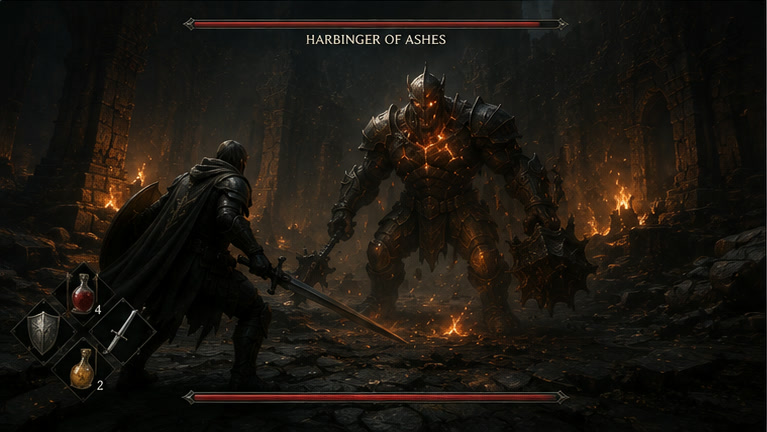
Boss Encounter
Combat-facing still showing the boss battle presentation and close-range melee pressure.
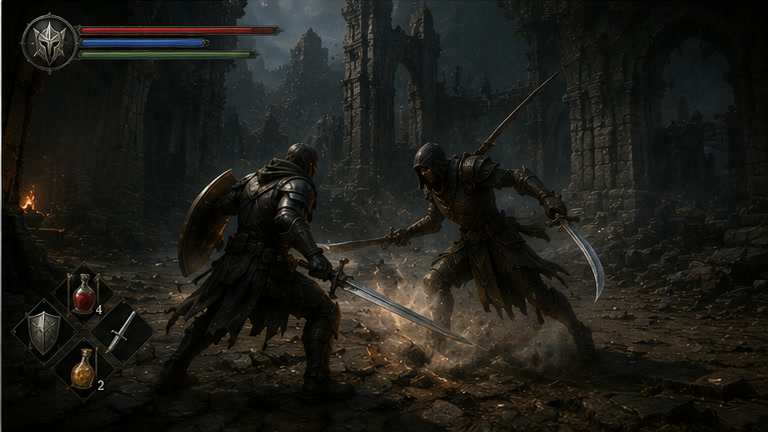
Melee Combat Exchange
Moment-to-moment combat still focused on weapon timing, defense, and readable enemy response.
Dark-fantasy action RPG prototype featuring responsive melee combat, enemy AI, boss encounters, character progression, equipment systems, and a modular data-driven gameplay architecture. This case study is structured to make the contribution, technical choices, and production thinking easy to review in a focused project walkthrough.
Built reusable gameplay architecture so combat, AI, progression, and item data could evolve without becoming tightly coupled.
Structured combat around state-driven actions, stamina cost, cooldown control, combo timing, and responsive player feedback.
Separated equipment, stat growth, and progression systems from the controller layer so new content could be added with minimal script changes.
Designed the project around modular systems instead of one-off mechanics so enemies, weapons, abilities, and upgrades could scale cleanly.
Used animation events to drive hit detection, combo windows, and combat timing instead of embedding those behaviors directly in animation clips.
Kept AI, progression, and item configuration data-driven so multiple encounters and builds could be supported from the same underlying systems.
Build state-driven combat for light attacks, heavy attacks, dodge, block, damage response, and abilities.
Create enemy behavior flow for patrol, detection, pursuit, attack, retreat, and death.
Connect progression through skill-tree branches, stat upgrades, abilities, and equipment modifiers.
Support exploration and long-session play with save/load progression and modular content hooks.
Prevented combat mechanics from turning into isolated scripts by separating action state, stamina rules, hit timing, and progression modifiers.
Allowed multiple enemy behaviors to share one core architecture through configurable state parameters rather than custom logic per enemy.
Made equipment and item stats extensible without rewriting the core player combat controller each time new gear was added.
A dark-fantasy action RPG prototype that demonstrates reusable combat architecture, configurable enemy AI, boss combat structure, and scalable progression systems inside Unity.
Add gameplay footage for combat, traversal, and boss encounters when a public capture is available.
Expand equipment variety and progression branches using the existing data-driven setup.
Add more explorable spaces and encounter types on top of the current modular systems.